

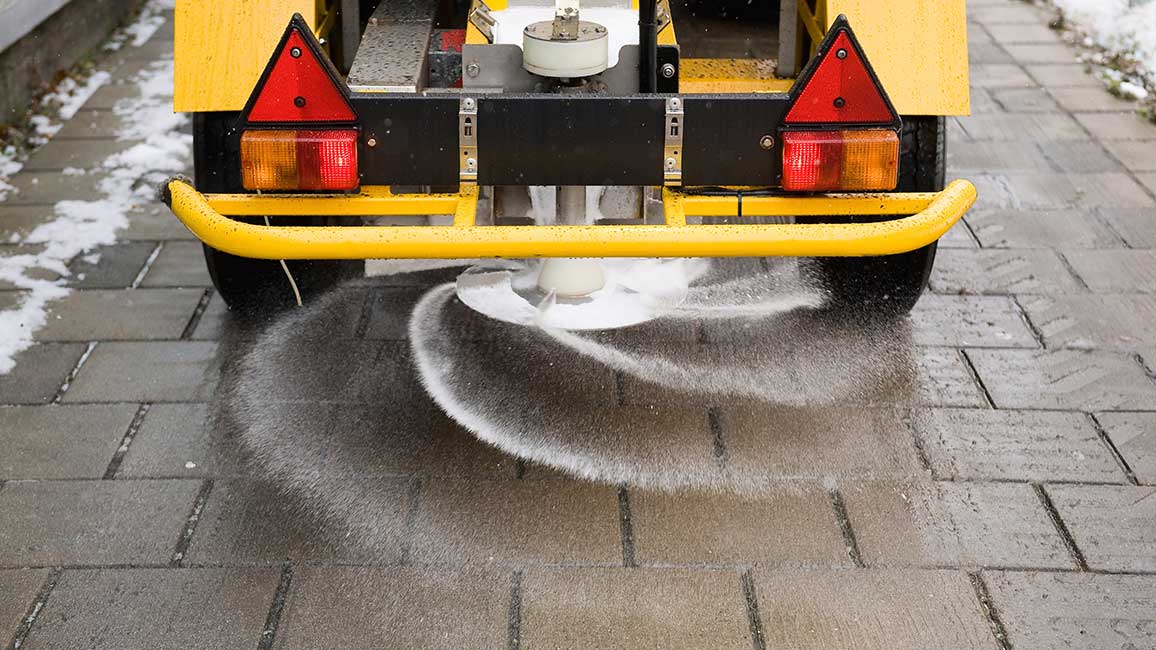
Winter brings snow and ice. Thus, your brick pavers can be dangerous and icy. As a result, you want to make these surfaces safe. But you also want to protect your pavers. The wrong ice melt salt may damage it. So, this guide will assist you in the selection of the right one.
Why This Matters
Brick pavers are strong. But they are also porous. This implies that they are able to take in water and chemicals. The water becomes ice, which expands when it is within the paver. This may lead to breakages and peeling.
Salt and ice-melt chemicals can make this worse. Some products penetrate deep into the paver and slowly weaken it over time. Others are much gentler and safer to use. Knowing the difference is key to protecting your pavers and extending their lifespan.
Avoid Sodium Chloride (Rock Salt)
Rock salt is also referred to as sodium chloride. It is cheap and easy to get. It melts ice by lowering the freezing point of water, which is why it’s so commonly used.
However, sodium chloride can be harsh on brick pavers. The reason is that salt can enter the brick’s pores. Seeping water may also destroy the surface when it refreezes. This may cause surface cracking and damage in the long run.
The surface can also be stained with rock salt. This white residue may cause the pavements to appear battered. It is even dangerous to plants and lawns surrounding your walkway or patio.
It is due to this that sodium chloride is the one that should be avoided in case you want to keep your pavers viable.
Better Options for Your Pavers
The following are ice melt salt solutions that are safer on brick-pavers:
1. Calcium Chloride
Calcium chloride performs well during cold weather. It is one of the fast melting ice options and can be used in lower temperatures in comparison to rock salt.
It works by pulling moisture from the air. This creates a brine which gets into ice and snow rapidly. This makes it melt faster.
Although calcium chloride is more powerful than rock salt, the use of this chemical tends to be less harmful to the pavers provided it is used appropriately. It is also employed in extremely low temperatures.
Pros:
- Works in very cold weather
- Melts ice fast
- Safety in pavers compared to rock salt.
Cons:
- Might be annoying to the paws of pets when used too much.
- Has the capability of leaving behind residue that must be washed off later.
2. Magnesium Chloride
Another good alternative is magnesium chloride. It is generally gentler on surfaces and less aggressive than many traditional ice-melt options.
While it doesn’t melt ice as quickly as calcium chloride, it is far less harmful to the environment and hardscape surfaces. It is also easier to clean up, which helps protect your paving over time.
Magnesium chloride is also less difficult to clean up. This is able to aid in defending your paving surface.
Pros:
- Gently melts ice
- Safer for pets and plants
- Works well on pavers
Cons:
- May requires a larger amount to work fast.
3. Calcium Magnesium Acetate (CMA)
Another alternative is the calcium magnesium acetate. It is a formula that combats the formation of ice.
CMA can be applied in advance of a snowfall. It causes reduced destruction to surfaces. It also affects the neighboring grass and other plants less.
It is not as fast melting as calcium chloride, but it is also among the most gentle ones.
Pros:
- Environmentally friendly
- Safe for hardscape surfaces
- Good before snow starts
Cons:
- Not quite strong in the dead of winter.
Avoid Harsh Additives
There are ice melts that contain ammonium sulfate or ammonium nitrate. They are very brutal to masonry. They even are able to shred very tough pavers. Products containing these chemicals should be avoided.
Potassium chloride is also to be used with care. It can not necessarily be safe on concrete surfaces and hardscapes.
Tips to Protect Your Pavers
The selection of the appropriate ice melt salt is just one of the solutions. The following are additional ways of safeguarding your brick pavers:
Use Ice Melt Sparingly
Less is more. The job will only require a thin layer. Excess supply may increase the chances of harm.
Apply Early
If you can, apply the ice melt before ice forms. This is to avoid a coarse connection between ice and pavers.
Rinse When Thawed
When the ice is melted, wash it off in case of any remaining salt or chemical. This will assist in maintaining the surface clean and limit the wear in the long-run.
Sweep Often
Sand or grit should not be left between the joints of the paving. These can trap water and dirt. In the long run, this may cause sliding and drainage issues.
Seal Your Brick Pavers for Extra Protection
Sealing of your pavers is also one of the best ways of protecting them. The small holes in the surface of the bricks are filled by sealers. This prevents the infiltration of water and ice.
Sealing is also used in minimizing salt penetration. It is able to block ice melt products that may damage the chemical.
With an excellent sealer, your pavements can be looking beautiful even after several winters. It facilitates cleaning as well.
At Paver Protector, we offer professional sealing services. We make your paves of bricks strong and beautiful even after many years.
Wrap-Up: What Ice Melt Should You Use?
Rock salt (sodium chloride) should not be used in case you desire long-term pavering of bricks. It can do more harm than good.
Instead, use more safe substitutes:
- Calcium chloride: Rapid, strong and operates in cold weather.
- Magnesium chloride: Gentler and yet useful.
- Calcium magnesium acetate(CMA): Environmentally friendly and safe.
Use only what you need. Rinse off after the ice melts. And preserve your pavements with a professional seal.
Winter is coming. Check for the protection of your brick pavers. Have your pavers sealed with Paver Protector. Visit www.paverprotector.com now and book our services. Make your home warm and lovely throughout the wintertime!


